Reimagining Tech Brand Identity
Through Futuristic Illustrations
Turning Vision into a Visual Narrative
When Callstack challenged me to reinvent their visual identity, the goal was not just aesthetic. It was strategic. They wanted to break through the noise of the software‑as‑a‑service market and appeal to both developers and senior business decision‑makers. Research on brand identity shows that a visual identity combines graphic elements such as a color palette, typography and imagery to represent a brand. These same elements also help identify it.
Aligning them with a company’s values helps create differentiation, trust and emotional connection. With that in mind, I set out to build a futuristic world that would communicate Callstack’s expertise in React. At the same time, the new visuals needed to make the company feel more human and forward‑looking.
#innovation #metaverse #heroes #development #interactive-experience #future #skills

Building a Palette for Innovation
The creative journey started with a carefully crafted color palette. Inspired by a my previous illustration, I extended the range of blues, purples and reds into luminous gradients. Studies on branding note that a cohesive palette helps customers recognize and differentiate a brand.
For Callstack, the interplay of vibrant hues and subtle transitions evoked the glow of alien sunsets. The same palette suggested the brilliance of circuit boards. This combination became the foundation for environments that felt both technological and otherworldly.

Establishing Stylistic Codes
To ensure consistency across all illustrations, I developed a set of stylistic codes.
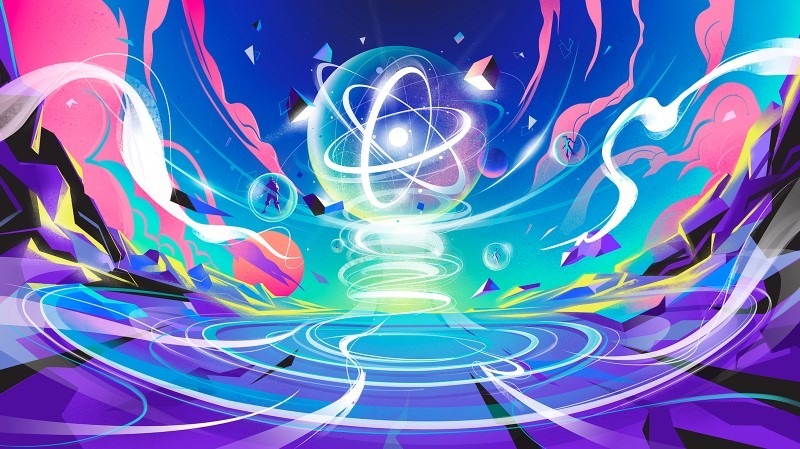
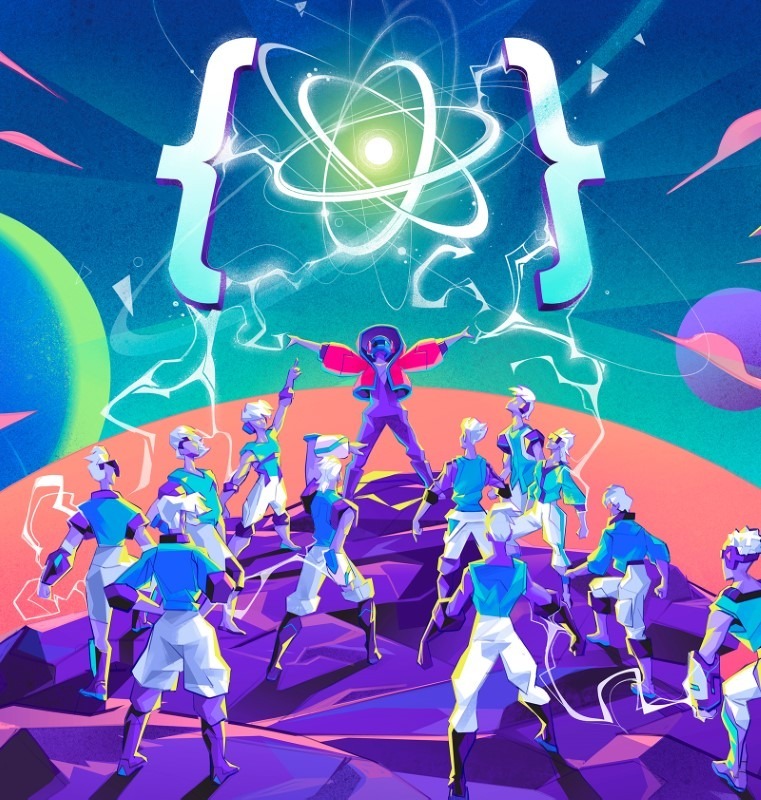
Lines of code and the React logo weave through each scene. They act as a visual shorthand for the company’s open‑source roots. A red sun rises on the horizon of every landscape. It symbolizes both the dawn of new ideas and the promise of continuous innovation.
These recurring motifs guide the viewer through the narrative and build recognition even when the logo is absent. That this kind of repetition is an effective way to showcase a brand’s unique personality.

Creating the React Universe
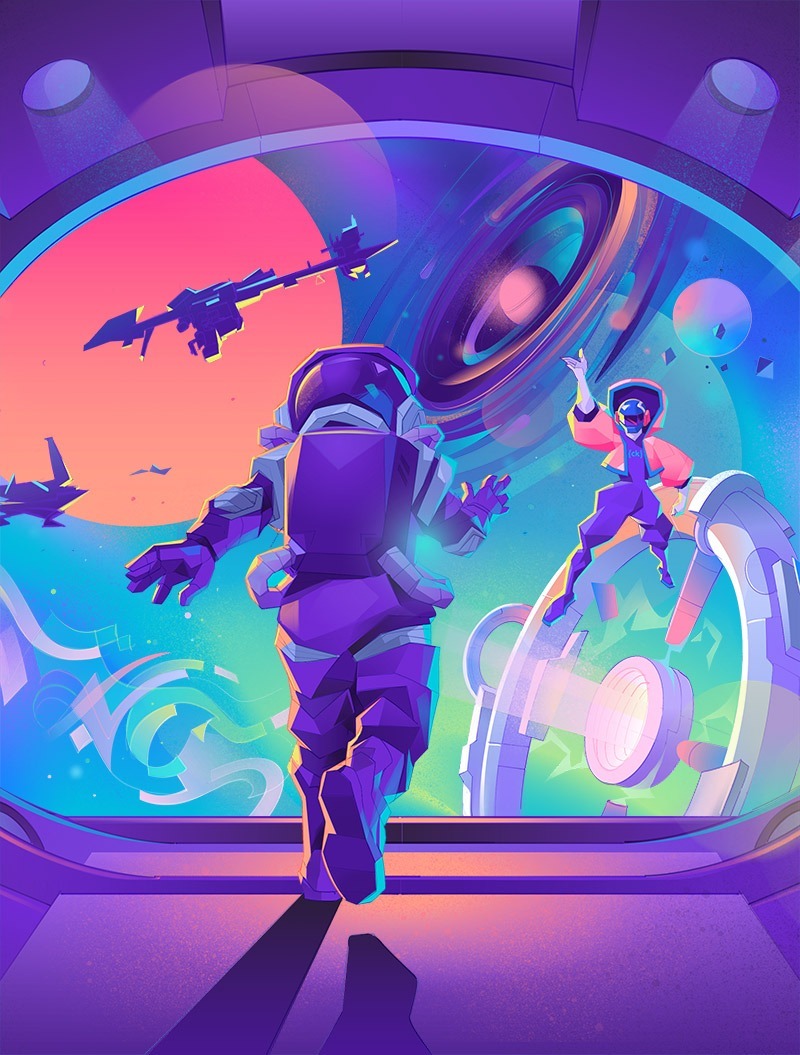
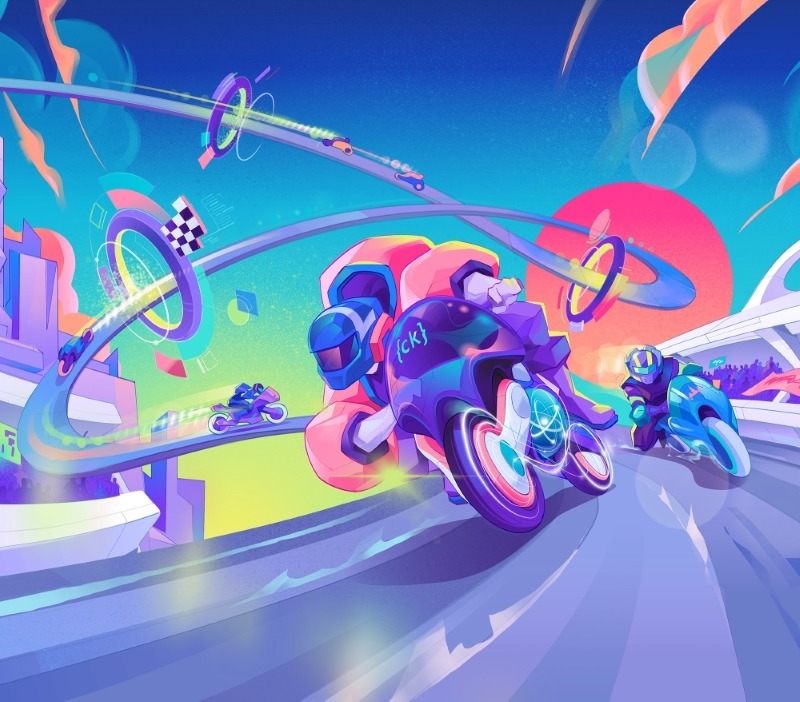
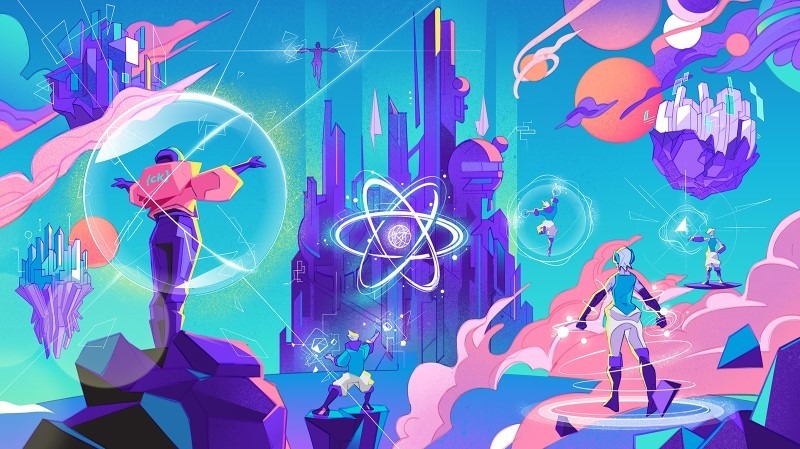
Callstack didn’t want a simple icon refresh; they wanted an ecosystem. I imagined a React Universe filled with hovering cities, advanced architectures and diverse civilizations. Hand‑drawn illustrations are powerful because they can tell a story and differentiate brands from competitors.
By designing custom costumes and props, I transformed abstract technological concepts into tangible worlds. Each environment communicates a different aspect of the company’s expertise. Some scenes reference scalable infrastructure. Others hint at modular design. Together they invite the viewer to explore rather than simply consume information.
Designing a Brand Mascot with Depth
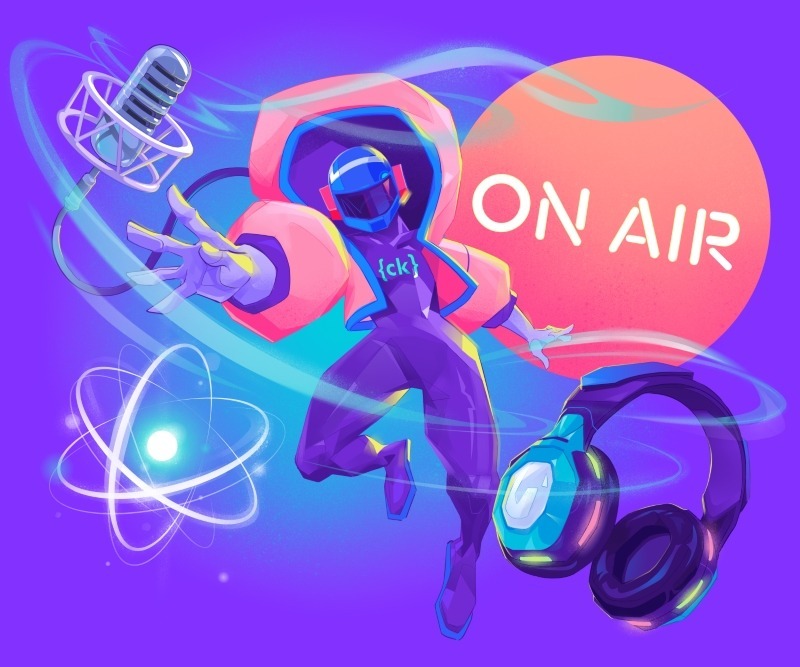
At the heart of this universe is the brand mascot. Mascots are living embodiments of a brand’s story. They create personal bonds with audiences and represent core values, acting as bridges between companies and consumers.
Callstack’s mascot went through many iterations. Early sketches envisioned a heroine with exaggerated curves. The final design emerged as an androgynous figure clad in cyber‑futuristic attire. The face is partially obscured to enhance mystery. This anonymity makes the character aspirational and inclusive. It aligns with Callstack’s message that anyone can be empowered through technology. Branding experts note that a mascot should be more than a static icon. It should integrate into the visual identity with dynamic expressions and its own backstory.
Our hero therefore appears in multiple poses. In some images the character guides users through portals. In others it interacts with code or holds the React logo. These varied situations reinforce Callstack’s mentorship role.


Shaping New Worlds from Pop Culture References
Influenced by decades of science‑fiction films and comic‑book lore, I looked at familiar tropes. My goal was not to replicate them but to subvert them. Illustration allows brands to visualize concepts and processes with creative freedom. This approach helps audiences connect with otherwise abstract ideas.
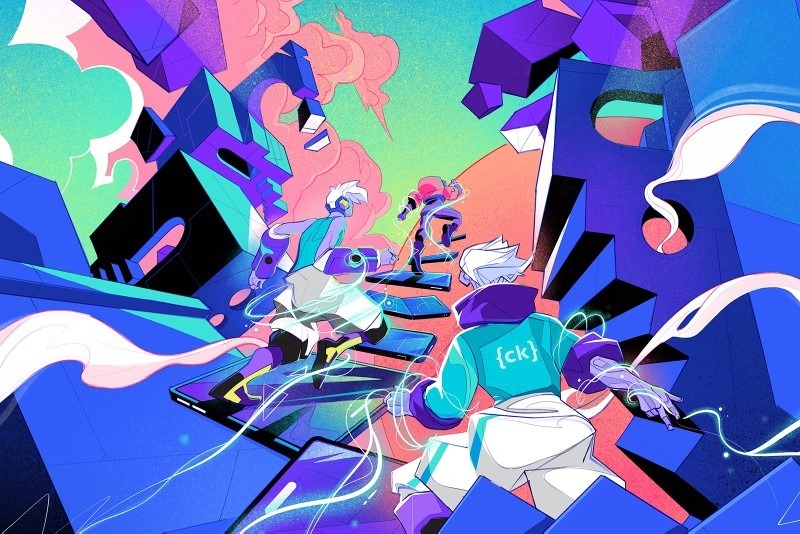
In the Callstack project, the architecture blends Brutalist slabs with sleek curves. The costumes mix high‑tech armor with organic textures. References to classic superheroes provide instant familiarity, while original patterns and alien flora signal innovation. By shaping this universe, Callstack positions itself as a pioneer rather than a follower.
Creating the worlds, with their cities in different styles, was a fun challenge that allowed me to add pure creativity to each new element.

From Sketch to Final Render: A Collaborative Workflow
Once the stylistic codes and key guidelines were defined, the creation process flowed smoothly. It moved through distinct stages.
It began with quick sketches that captured the core composition and narrative of each scene. These draft layouts were shared early with the team to ensure alignment on concept and composition.
Once a sketch was approved, I moved into the color phase. I layered in the chosen palette and gradients to establish mood and depth.
The final rendering stage added nuance. Textures, lighting effects and atmospheric details were meticulously applied to bring each illustration to life.
This step‑by‑step approach — moving from approved line art to color, and then to detailed rendering — allowed for efficient collaboration while maintaining creative integrity.

Beyond the Screen: Multichannel Adaptation

One of the project’s core objectives was to deliver assets that could be adapted across Callstack’s digital and physical touchpoints. Research on illustration in branding notes that custom illustrations can breathe life into brand messaging and resonate with audiences in ways that stock graphics cannot.
Our modular approach allowed the internal communications team to pick elements — characters, icons and backgrounds — and recompose them for websites, social posts, conference booths and swag. Animations of the red sun rising were used on the homepage. Close‑ups of the mascot accompanied blog articles. Printed posters showcased entire cityscapes at events.
This consistency across media built trust and credibility. It also gave Callstack’s marketing team the flexibility to tailor content for each audience.
Results and Business Impact
By adopting a futuristic illustration system, Callstack moved away from generic corporate visuals. This shift repositioned the company as a thought leader. A clear visual identity is not only about aesthetics. It contributes to brand recognition, differentiation, trust and emotional connection.
Feedback from clients indicated that the new visuals made the company’s services easier to understand and more relatable. The mascot, in particular, became a conversation starter at conferences and on social media. It humanised the brand and embodied its mission to guide developers through the complexities of modern software engineering.
Investing in original, narrative‑driven art can transform a tech company’s brand perception. It also shows how compelling visuals provide marketers and CEOs with a powerful tool for storytelling.
Take a look at the whole original illustration series created for Callstack’s creative communication.